Manipal is well connected by road, rail and air. There are two main cities close to Manipal that serve as entry points – Udupi and Mangalore. Udupi is 5 km from Manipal and Mangalore is 65 Km away.
Nearest Railway Station:
Manipal is well connected by road, rail and air. There are two main cities close to Manipal that serve as entry points – Udupi and Mangalore. Udupi is 5 km from Manipal and Mangalore is 65 Km away.
Nearest Airport: Mangalore airport is about 60 kilometers by road from Manipal and it is an international airport well connected with Mumbai and Bengaluru.
Whether you are visiting for a conference or a short stay, Manipal offers a range of comfortable accommodation options to suit different preferences and budgets. From premium hotels to convenient business stays
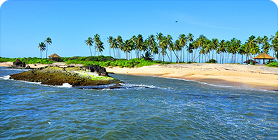
This is a very beautiful island which can be reached from a place very near to Malpe beach. It is a small island and around 2 hours can be used to explore it before the ferry takes you back. It is very clean and very beautiful. St. Mary’s isles are group of islands accessible by ferry from Malpe. Vasco da Gama is understood to have touched the island in 1498 before he reached Calicut. The Islands are just a few scattered projections of rock rising out of the Arabian Sea round about Malpe. The northern most islands are about a square mile in area and not more than 250 yards in width. It has a coconut garden, which makes it the shadiest isle of the group and gives it a true south sea colour.
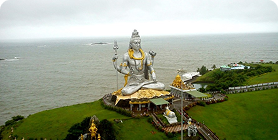
Home to a huge Shiva statue, this place is another 40 km from Turtle Bay. It can be visited on the way to Gokarna or Goa. The sea is an intrinsic part of the temple at Murudeshwar. The sea on three sides surrounds the temple towering on the small hill called Kanduka Giri. Two life-sized elephants in concrete stand guard at the steps leading to the temple. The Murudeshwar temple has a history that dates back to a few centuries. A small temple existed here for generations. A recent attraction is the Lord Shiva idol erected beside the temple. The idol towers 123 feet into the sky and is the tallest Shiva idol in the world.
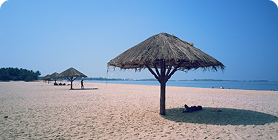
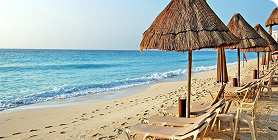
It is around 10 km from Manipal. The beach is clean, peaceful and beautiful. There is a famous beach resort which serves delicious food. The resort hosts some spectacular beach dance parties and provides excellent accommodation to visitors. As the sun begins to set, the horizon transforms into a canvas of deep oranges and purples, providing the perfect backdrop for a quiet evening stroll. The gentle rhythm of the Arabian Sea creates a soothing soundtrack, making it an ideal escape for those looking to disconnect from the hustle of academic or professional life.
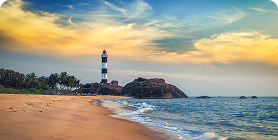
The lighthouse at this beach is famous and is not very crowded. At a distance of 15 kilometres from Manipal, it is a very popular destination for the students of Manipal Academy of Higher Education to spend weekends. The light house, built by British in 1901, is located on the shores of Arabian Sea. This light house has guided thousands of ships for years. Since the light house is constructed on a rock it gives added visibility across the sea. The tower’s height is 89 ft with three white flashes every 20 seconds and the range is 24 nautical miles. It is widely considered the best sunset point in the Udupi district.
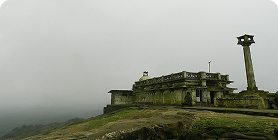
Kundadri is a hill (826 mt) with dense forests in the Western Ghats located in Shimoga District Karnataka State, India. It is 70 km from Manipal. This hill is known for 17th century Jain temple dedicated to Thirthankara and the place is known to have given shelter to one Kundakunda Muni during earlier centuries. More than two thousand years ago, a jain sage named Kundakunda Acharya stayed here and prompted the birth of this jain holy place. A temple is constructed with stone statues of jain sages. There are numerous mini-buses from Udupi to Thirthahalli. From Udupi Railway Station 86 km to Thirthahalli. The nearest railway station is in Shimoga.
Home to a huge Shiva statue, this place is another 40 km from Turtle Bay. It can be visited on the way to Gokarna or Goa. The sea is an intrinsic part of the temple at Murudeshwar. The sea on three sides surrounds the temple towering on the small hill called Kanduka Giri. Two life-sized elephants in concrete stand guard at the steps leading to the temple. The Murudeshwar temple has a history that dates back to a few centuries. A small temple existed here for generations. A recent attraction is the Lord Shiva idol erected beside the temple. The idol towers 123 feet into the sky and is the tallest Shiva idol in the world.
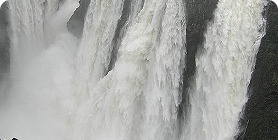
This is India’s highest waterfall and is about three hours by road from Manipal. The best time of the year to visit these falls is during monsoons, preferably July and August. The flow of water is restricted by the dam during the rest of the year. Jog is the translation of the Kannada word “Joga” in Kannada. The roaring waters of the River Sharavati drops from a height of 875 ft to form the glorious waterfall. While doing so Sharavati is split into four different tracks namely “Raja”, “Rani”, “Roarer” and “Rocket”. During summer when the water levels are low, one can actually walk down to the bottom of the falls. Jog falls is the fifth highest waterfall in Asia.
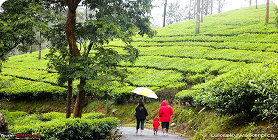
Coorg is situated on the Western Ghats in Karnataka. For those interested in adventure, it is an absolute treat. There is trekking, golfing and angling (Mahaseer too!) options available. Religious trips abound on Hindu and Buddhist circuits. Family getaways can be easily arranged. You can also relax your body and mind with special Ayurvedic massages. Coorg is also as trendy and happening place as its close neighbour Bangalore. But the predominant entity here is nature at its best. Coorg is like the dreamland of the philosopher. If you are the type who likes to mingle with nature, feel the tingle of cool and gentle breeze, then Coorg is just the place for you.
The most popular tourist destination is just five hours by train from Manipal. Indeed, Goa needs no description. It is a well-known place. The beaches and the food are all yours. The students do not miss out on the opportunity to visit some of the places in Goa during their stay in the University. The closest and the best beach is Palolim. A trip to this beach on Saturday is delightful. The best time to visit these places is from the middle of November to the end of March. It starts to get hot from April onwards and the monsoon generally arrives in June. Storms and heavy rains for months follow in the coming months.
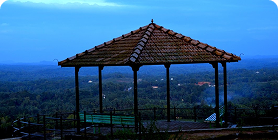
At one end of Manipal is End Point, which is a cliff overlooking the Swarna river. From this point one can see the Arabian sea in the western horizon and western Ghats in the eastern horizon.
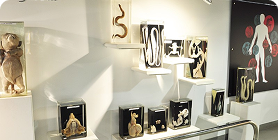
On most days, there is a serpentine queue outside the Manipal Museum of Anatomy and Pathology, or MAP, a sprawling building diagonally opposite the main education building. Apart from college and school students, some from as far away as Mysore and Mumbai, there is a usually scattering of medical professionals and tourists from around the world, jostling to get in. Billed as one of the largest in Asia, the museum boasts of over 3,000 specimens and samples of things anatomical, including the skulls of an elephant and a whale, and the long skeleton of a King Cobra.

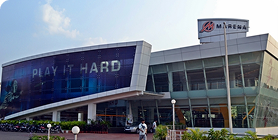
Manipal Academy of Higher Education’s Sports Complex named ‘MARENA’ is an exciting one with state-of-the-art facilities made to cater to the recreational and fitness needs of students and staff. The ides of a complex such as this stemmed from the fact that manipal is totally drenched for about six months during monsiins, frustrating sports enthusiasts and the fitness freaks.
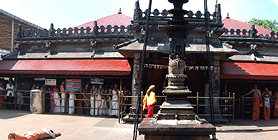
Mookambika is situated in Kollur village of Udupi Karnataka. Mookambika temple is among the most important shrines for Hindus in India. Mookambika Temple is also one of the most legendary temples. Mookambika Kollur is a small village of about 6 sq. kms in area at the foot of Western Ghats. Kollur Temple itself is generally known as ‘Mookambi’ or ‘Moogambigai’ in Kerala and Tamil Nadu respectively. Though the Kollur Mookambika Temple is in Karnataka most of the devotees visiting the Mookambika temple are either from Kerala or from Tamil Nadu.
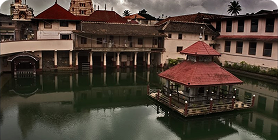
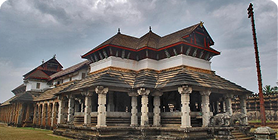
Thousand Piller Temple located in Moodabidre/Bedra (also called Mudbidri, Moodbiri) Its also called Bedra in Thulu (Native Language), is a small town 37 km northeast of the Dakshin kannada District Headquarters, Manglore, In Karnataka, India. Gowri Temple located at heart of the city is the oldest temple in Moodbidri. The temple is said to have been build in 7th century.
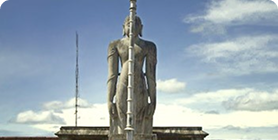
Karkala (Tulu/Kannada/Konkani) is a town and also the headquarters of Karkala Taluk in Udupi district of Karnataka, India, and is located about 380 km from Bangalore. It lies near the Western Ghats. The first name of this town was Pandya Nagari during the Jain regime but afterwards it was changed to Karikallu because of black stones. Over time, the name changed to Karkal and then to Karkala. Karkala has a number of natural and historical landmarks including the Ramasamudra Lake.
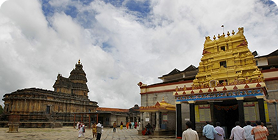
Sringeri, also written as Shringeri, Srngeri and Srngagiri is a taluk located in Chikmagalur district in the Indian state of Karnataka, is the site of the first matha established by Adi Shankaracharya, Hindu theologian and exponent of the Advaita Vedanta philosophy, in the 8th century C.E. It is located on the banks of the river Tunga. Sharadamba temple The Sharada temple, dedicated to the Goddess of learning and wisdom, has grown from a simple shrine dating to the time of Adi Shankaracharya. In the fourteenth century, Vidyaranya is said to have replaced the old sandalwood image with a stone and gold image. The temple structure itself continued to be made of wood till the early 20th century.
Horanadu is a hindu holy city located in chickmangalur district, Karnataka, India. The deity at the Annapoorneshwari Temple at Horanadu is Annapurneshwari. The idol of Goddess Annapurneshwari was established in 1973 in the temple.
Dharmasthala (Tulu/Kannada) is a temple village on the banks of thr Nethravathi River in the Belthangadi taluk of the Dakshina Kannada District in Karnataka. The temple is devoted to Shiva and Houses a linga of gold. The temple is unusual in that it is run by a jain administration and Poojas are conducted by Hindu priests of Madhva order. Lakshadeepa the festival of Dharmasthala comes off in November-December. [2] On an Average the flow of pilgrims is about 10,000 people a day. A mechanised kitchen provides free food for all Pilgrims and there are quest houses with modern amenities.